
Optional free-roam, explained
Free-roam sections are optional exploration beats inside a visual novel. The demo announcement lists them as a system, which means they are part of the design rather than a one-off scene — and because they are optional, nothing in them is required to finish the demo.
Most visual novels never let you walk. Free-roam is the exception, and I Have Known You builds it into the demo as an optional layer: the story stops, the camera pulls back, and you get to move through Wildflower instead of reading about it.
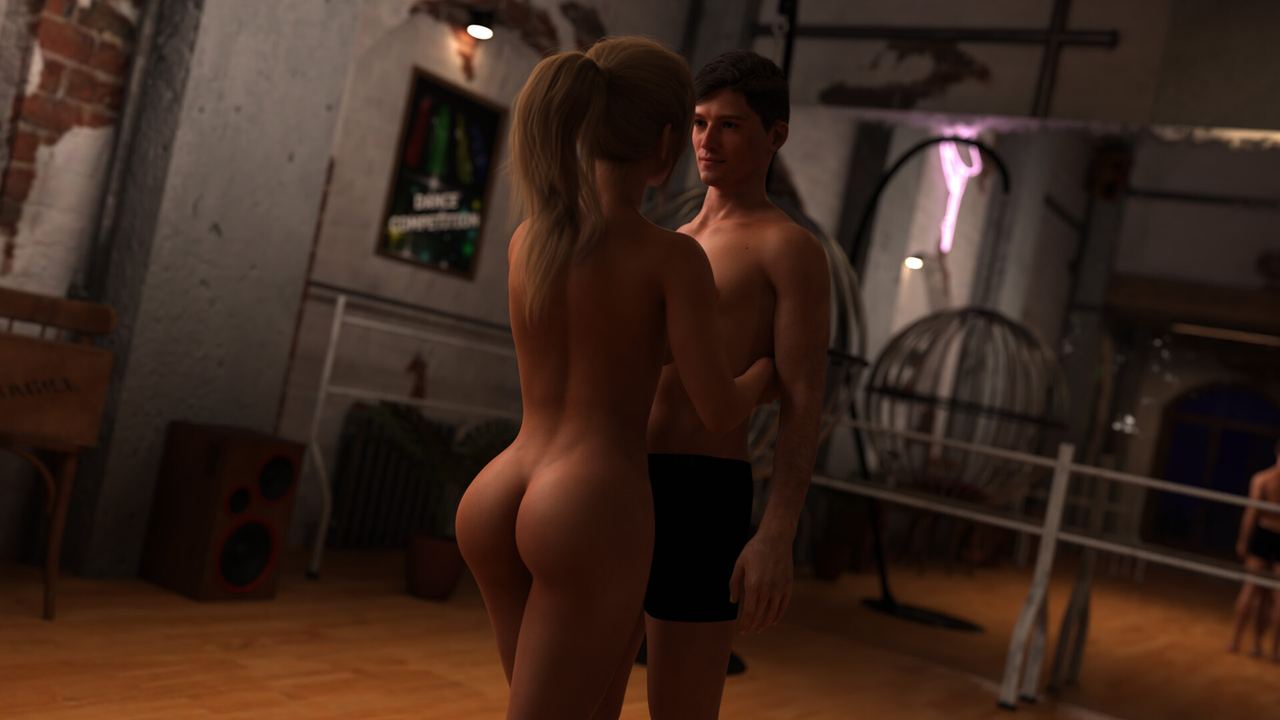
What "optional" is doing in that sentence
The announcement lists "optional free-roam sections" as one of the four systems in the demo. The word optional carries real design weight. It means the story does not require you to explore, and it also means the exploration cannot contain anything the plot depends on — otherwise it would not be optional.
So free-roam is there for a different job: texture. It is where the town becomes a place with a layout rather than a set of backgrounds, and where the game can show you things it would be clumsy to state in dialogue. If you skip every free-roam section, you will still understand the story. You will just know less about Wildflower.
How a free-roam section announces itself
The transition is not subtle once you know what to look for. Dialogue stops advancing on click, the dialogue box clears or recedes, and the game hands you control of the protagonist. From that point the demo behaves like a small adventure game: you move, you approach things, and you interact.
| Signal | What it means |
|---|---|
| Dialogue box disappears, scene stays | You are being handed control |
| Movement responds to input | Free-roam is live |
| Objects and doors highlight or respond | Those are the interaction points |
| Dialogue box returns | The section is over; the story resumes |
If you click expecting the next line and nothing happens, look at the screen again. That is usually the moment control has changed hands.
What to do in one
The instinct is to find the exit. Resist it for one pass.
- Walk the perimeter first. The shape of the walkable area tells you what kind of town this is: how close the forest comes, whether the water is visible, which buildings face which way.
- Then interact with everything. The interaction points are chosen, not scattered. Each one is a sentence the writer wanted you to read in your own time rather than in dialogue.
- Look for the people. Free-roam in a relationship-driven game is usually where you find someone before the plot does. Approaching a character outside a scripted scene is the closest the demo gets to letting you choose your own order.
- Notice what you cannot reach. A locked door in a demo is a promise about the full game, and it is worth remembering which one it was.
Why a visual novel bothers
A pure visual novel is a sequence of images and text. It is cheap to make and completely controlled: the writer decides what you see and when. Free-roam gives up some of that control in exchange for presence.
For this story specifically, presence is the point. The premise is a man returning to a town that remembers him. Reading that is one experience; walking down a street you supposedly grew up on is another. Free-roam is the mechanism that converts the premise from a statement into a feeling.
It also solves a pacing problem. A demo that is 100% dialogue has one rhythm. Inserting optional stretches where the player sets the pace gives the story somewhere to breathe, and it gives the player a way to recover after a heavy scene without skipping it.
The trade-offs you will notice
Free-roam sections have costs, and the demo does not hide them.
| Trade-off | How it shows up |
|---|---|
| Pace | Exploration slows the story down; the plot waits for you |
| Direction | Without a marker, it is possible to wander and find nothing |
| Scope | Only some areas can be walkable, so the town is not fully open |
| Reward | Optional content cannot gate the plot, so the payoff is texture, not progress |
None of these are mistakes. They are the standard shape of optional exploration in a narrative game, and the demo's job is to show you how much of it the full release will have.
How to tell whether it is for you
If you play visual novels for the reading, free-roam will feel like an interruption. Walk one section, then skip the rest — the demo will not punish you, and the story will still make sense.
If you play them for the world, this is the part of the demo that will sell you on the full game. A coastal town with a 300-year-old witch hunt is a setting that benefits from corners, and free-roam is where the corners are.
Either way, the decision is reversible inside a single demo run, which is more than most systems can offer. Try one section properly, then decide.
The demo guide puts free-roam next to the other three systems, the demo walkthrough shows where it falls in play order, and the setting page explains what the town is for.
What free-roam is not
It is not an open world. The walkable area in a section is a scene-sized space, not a town you can cross in any direction, and there is no fast travel because there is nowhere far to go.
It is not a stealth section or a puzzle wrapper. There is no fail state, no timer and nothing to sneak past. If you stop interacting, the story waits.
It is not a hub you return to between chapters. Sections open when the story opens them and close when it moves on, which is why skipping one costs you texture rather than progress.
That combination is what "optional" means in practice: a deliberate pause in the reading, with nothing at stake except what you notice.
Everything here is drawn from the demo announcement and the store page, checked on 3 November 2026.
Read next
- The Journey systemSystems
- Who is in WildflowerCharacters
- Reading the character profilesData
- Wildflower, the town that remembersStory